
E-signature legality
Are electronic signatures legal? Mostly — with exceptions.
In most countries an electronic signature is valid for everyday contracts. Wills, some property and family documents, and court filings are common exceptions. Each country page names the law, links to it, and lists what it excludes.

14 jurisdictions
Pick a country
- AustraliaElectronic Transactions Act 1999 (Cth) · Electronic Transactions Regulations 2020Reviewed Oct 17, 2026
- BrazilMedida Provisória nº 2.200-2, de 24 de agosto de 2001 · Lei nº 14.063, de 23 de setembro de 2020Reviewed Oct 17, 2026
- CanadaPersonal Information Protection and Electronic Documents Act (PIPEDA), Part 2 “Electronic Documents” · Secure Electronic Signature Regulations, SOR/2005-30Reviewed Oct 17, 2026
- European UnionRegulation (EU) No 910/2014 (eIDAS) · Regulation (EU) 2024/1183 establishing the European Digital Identity Framework (eIDAS 2.0)Reviewed Oct 17, 2026
- FranceCode civil, articles 1366 and 1367 · Code civil, articles 1174 and 1175 (version in force since 1 January 2022)Reviewed Oct 17, 2026
- GermanyRegulation (EU) No 910/2014 (eIDAS) · Bürgerliches Gesetzbuch (BGB) §126 SchriftformReviewed Oct 17, 2026
- IndiaInformation Technology Act, 2000 (No. 21 of 2000) · Notification S.O. 4720(E) amending the First Schedule of the IT ActReviewed Oct 17, 2026
- JapanAct on Electronic Signatures and Certification Business (電子署名及び認証業務に関する法律), Act No. 102 of 2000 · Code of Civil Procedure (民事訴訟法), art. 228(4)Reviewed Oct 17, 2026
- MexicoCódigo de Comercio, Libro Segundo, Título II “Del Comercio Electrónico” (arts. 89–114) · Código Civil Federal, art. 1834 bisReviewed Oct 17, 2026
- SingaporeElectronic Transactions Act 2010 (2020 Revised Edition)Reviewed Oct 17, 2026
- South AfricaElectronic Communications and Transactions Act 25 of 2002Reviewed Oct 17, 2026
- United Arab EmiratesFederal Decree-Law No. 46 of 2021 on Electronic Transactions and Trust Services · Federal Decree-Law No. 46 of 2021 (English translation published by TDRA)Reviewed Oct 17, 2026
- United KingdomElectronic Communications Act 2000, section 7 · UK eIDAS: Regulation (EU) No 910/2014 as retained and amended in UK lawReviewed Oct 17, 2026
- United StatesElectronic Signatures in Global and National Commerce Act (ESIGN), 15 U.S.C. §7001 et seq. · Uniform Electronic Transactions Act (UETA), Uniform Law CommissionReviewed Oct 17, 2026
Evidence, from the signer's side
What a signer sees when you send with PDFBetter
Before the document opens, the signer can be asked for a code emailed to them, then reads the full consumer disclosure and agrees to use electronic records — or chooses paper or declines. Their signature goes only into the fields assigned to them, their own key, created in their browser and never leaving their device, signs a statement of exactly what they entered, and each step is recorded in the audit trail.
Real screens on a phone. Sample content; names are fictional.
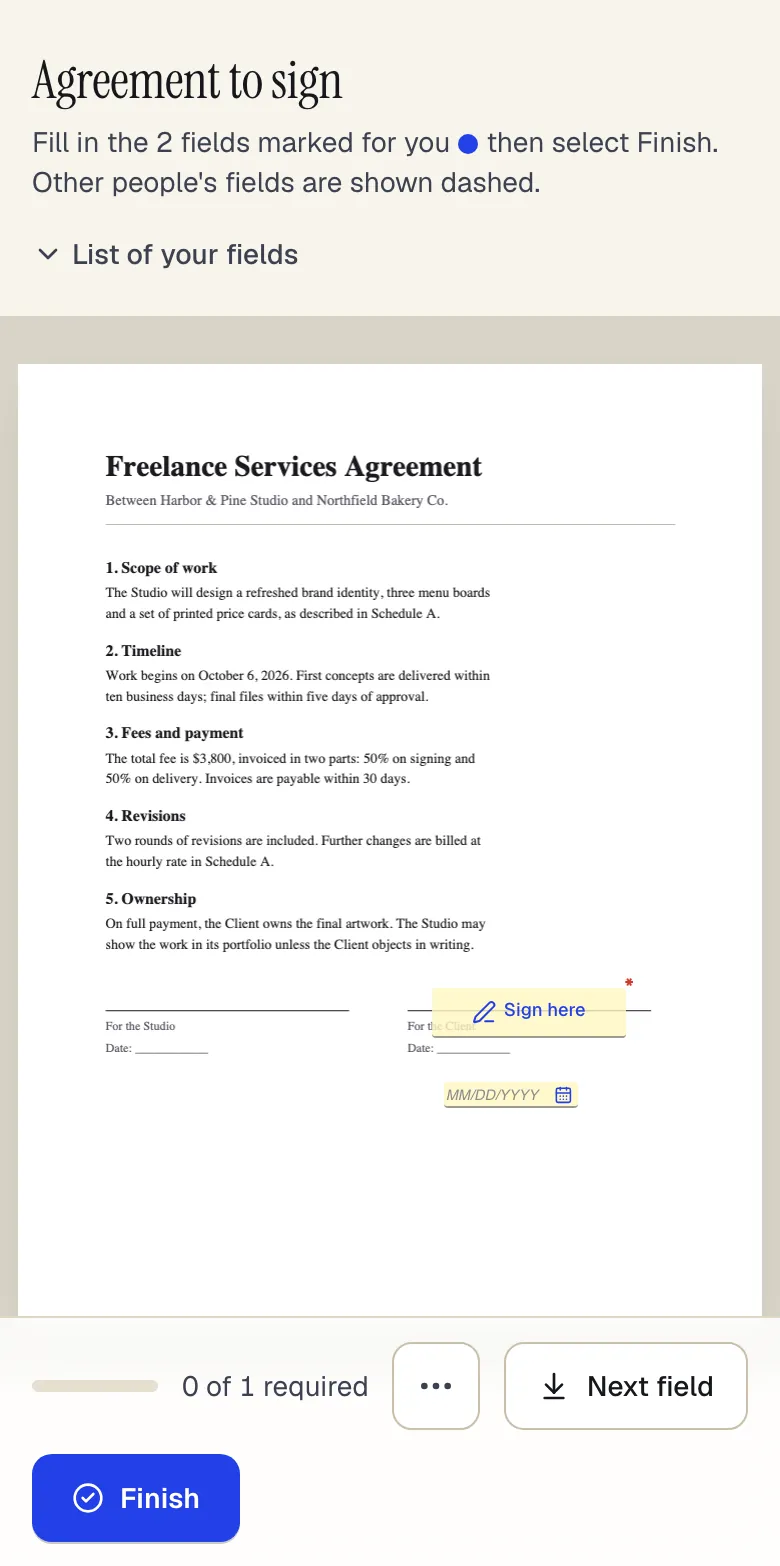
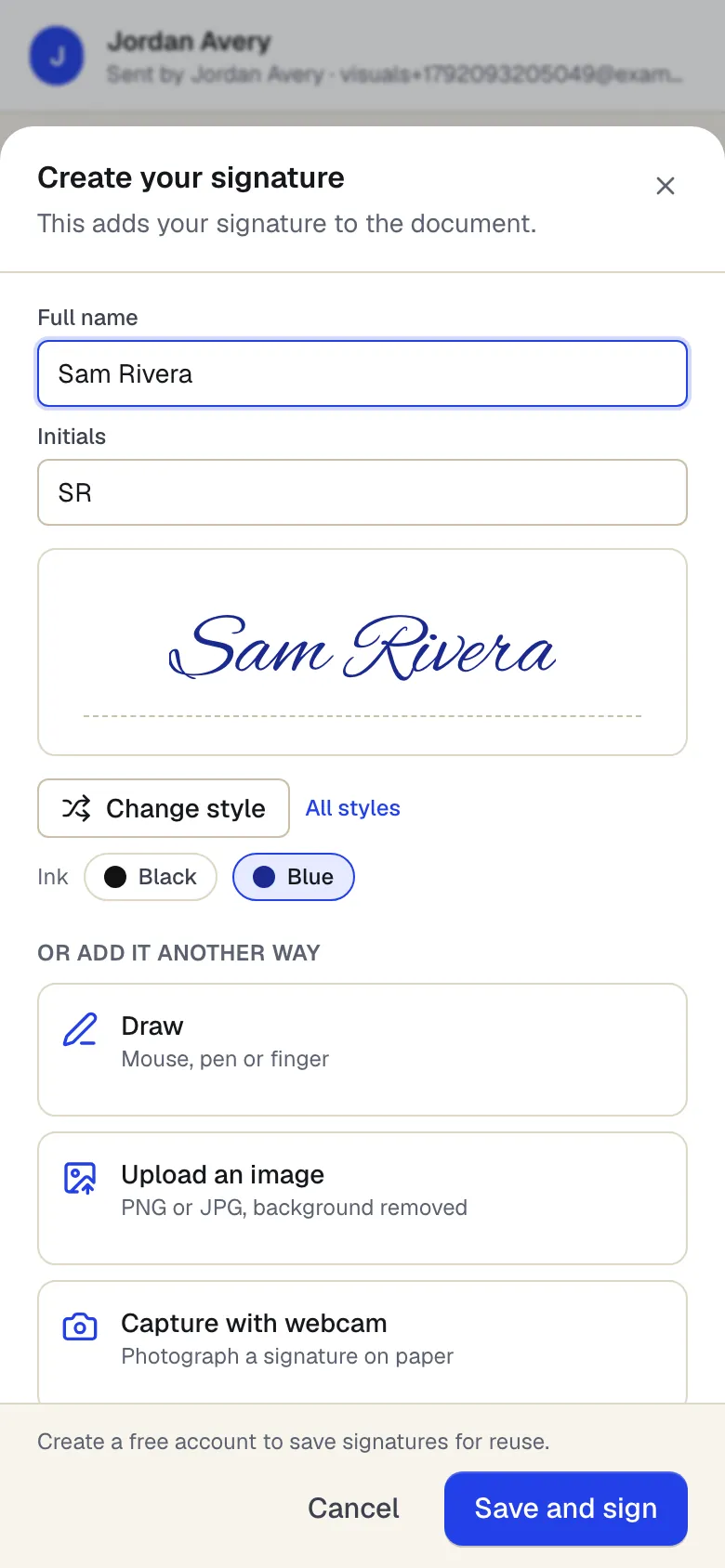
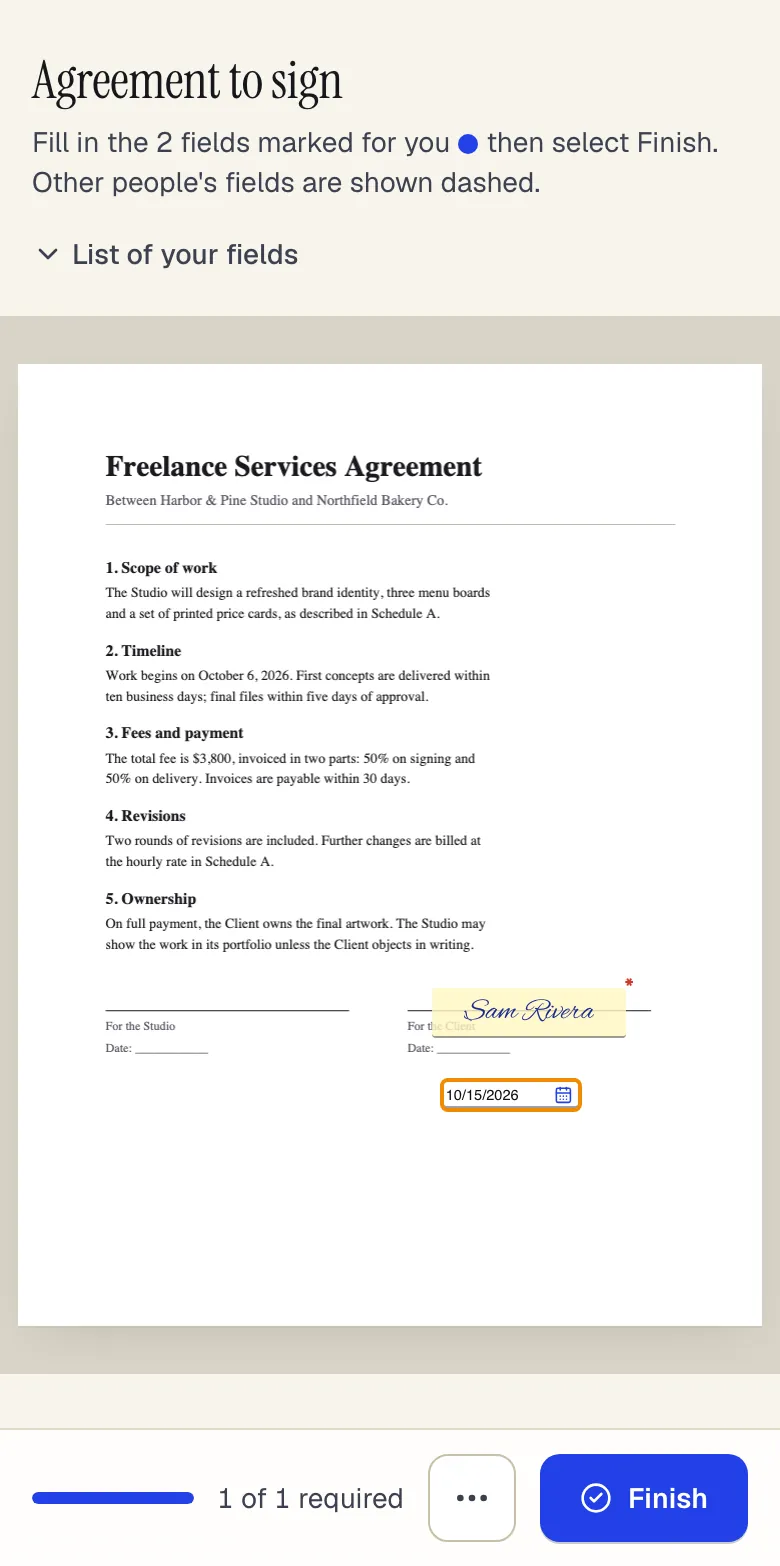
Three levels
Simple, advanced and qualified signatures
Most laws accept the first level for ordinary agreements. The EU's eIDAS Regulation (No 910/2014) defines all three; other countries use similar ideas under different names.
1
Simple electronic signature (SES)
Any electronic mark that shows you agree: a typed name, a drawn signature, a click on “I agree”. In the US (ESIGN Act, UETA) and the EU (eIDAS) it can’t be refused just because it’s electronic. Its weight in a dispute depends on the evidence of who signed and when.
What PDFBetter provides
2
Advanced electronic signature (AdES)
An EU category (eIDAS art. 26): the signature is uniquely linked to and identifies the signer, is under their sole control, and is bound to the document so later changes are detectable. PDFBetter signature requests are designed to these technical requirements: a unique key per signer, under their sole control, linked to the document so any change is detectable. Signers are identified by email (and an optional emailed code), not by ID documents or SMS.
3
Qualified electronic signature (QES)
An advanced signature made with a qualified signature-creation device and a qualified certificate from a trust service provider on an EU trusted list. Under eIDAS it has the same legal effect as a handwritten signature in every EU member state.
Not offered by PDFBetter
What PDFBetter records
Every signer’s own key. Every PDF sealed.
Every signer signs with their own cryptographic key: their browser generates a key that never leaves the device and signs a statement binding the document’s SHA-256 fingerprint to exactly what they entered, and PDFBetter’s certificate authority certifies it. Every completed PDF and its certificate of completion are digitally sealed and independently time-stamped, so changing one byte shows in PDF readers. The evidence — signed statements, device signatures, certificates and a hash-chained audit trail — is built into the file and kept for 7 years.
Signature requests are designed to the technical requirements of an advanced electronic signature (eIDAS art. 26): a unique key per signer, under their sole control, linked to the document so any change is detectable. Signers are identified by email (and an optional emailed code), not by ID documents or SMS, phone or knowledge-based questions. They are not qualified electronic signatures, and the seal comes from PDFBetter’s own certificate authority, which Acrobat does not yet trust by default (change detection still works). If a document legally requires a qualified signature, a notary or wet ink, use that instead.