
E-signature legality · Brazil
Are electronic signatures legal in Brazil?
Reviewed
In short
Yes, generally. Under Medida Provisória 2.200-2/2001, electronic documents are valid as public or private documents; those signed with an ICP-Brasil certificate are presumed authentic, and other methods are valid when the parties accept them or the person the document is used against accepts it. Lei 14.063/2020 defines simple, advanced and qualified signatures and requires the qualified level for some dealings with public bodies, such as real-estate transfers and registrations.
The law
Laws that apply
- 2001Medida Provisória nº 2.200-2, de 24 de agosto de 2001
Creates ICP-Brasil. Art. 10 §1: declarations with ICP-Brasil certification are presumed true as to the signatories; §2: other means of proving authorship and integrity are valid if admitted by the parties or accepted by the person the document is used against.
Source: planalto.gov.br
- 2020Lei nº 14.063, de 23 de setembro de 2020
Defines simple, advanced and qualified (ICP-Brasil) electronic signatures for interactions with public entities and health documents; art. 5 requires qualified signatures for certain acts, including transfer and registration of real estate.
Source: planalto.gov.br
- 2015Código de Processo Civil (Lei nº 13.105/2015), arts. 411 and 784 §4
Art. 411 recognizes electronic certification of authorship; art. 784 §4 (added in 2023) accepts any legally recognized electronic signature on enforceable private instruments, without witnesses when integrity is verified by a signature provider.
Source: planalto.gov.br
- 2002Código Civil (Lei nº 10.406/2002), arts. 108, 1.864 and 1.876
Form requirements that still apply: public deeds for real-estate rights above 30 minimum wages, and the formalities for public and private wills.
Source: planalto.gov.br
Generally fine to sign electronically
- Private commercial contracts between businesses, with signature methods the parties accept
- Employment and service agreements
- Leases and private real-estate instruments, subject to registry and deed rules
- Consumer terms and adhesion contracts
- Enforceable private instruments (títulos executivos) signed electronically under CPC art. 784 §4
Exceptions and extra formalities
- Acts that require a public deed (escritura pública), including transfers of real-estate rights above the Civil Code threshold; notaries handle these, including through the e-Notariado platform
- Public wills, which are written by a notary, and private wills, which have witness requirements
- Interactions with public entities where Lei 14.063/2020 requires an advanced or qualified signature, such as transfer and registration of real estate
- Prescriptions for controlled medicines and electronic medical certificates, which require qualified signatures
In practice
Things to know
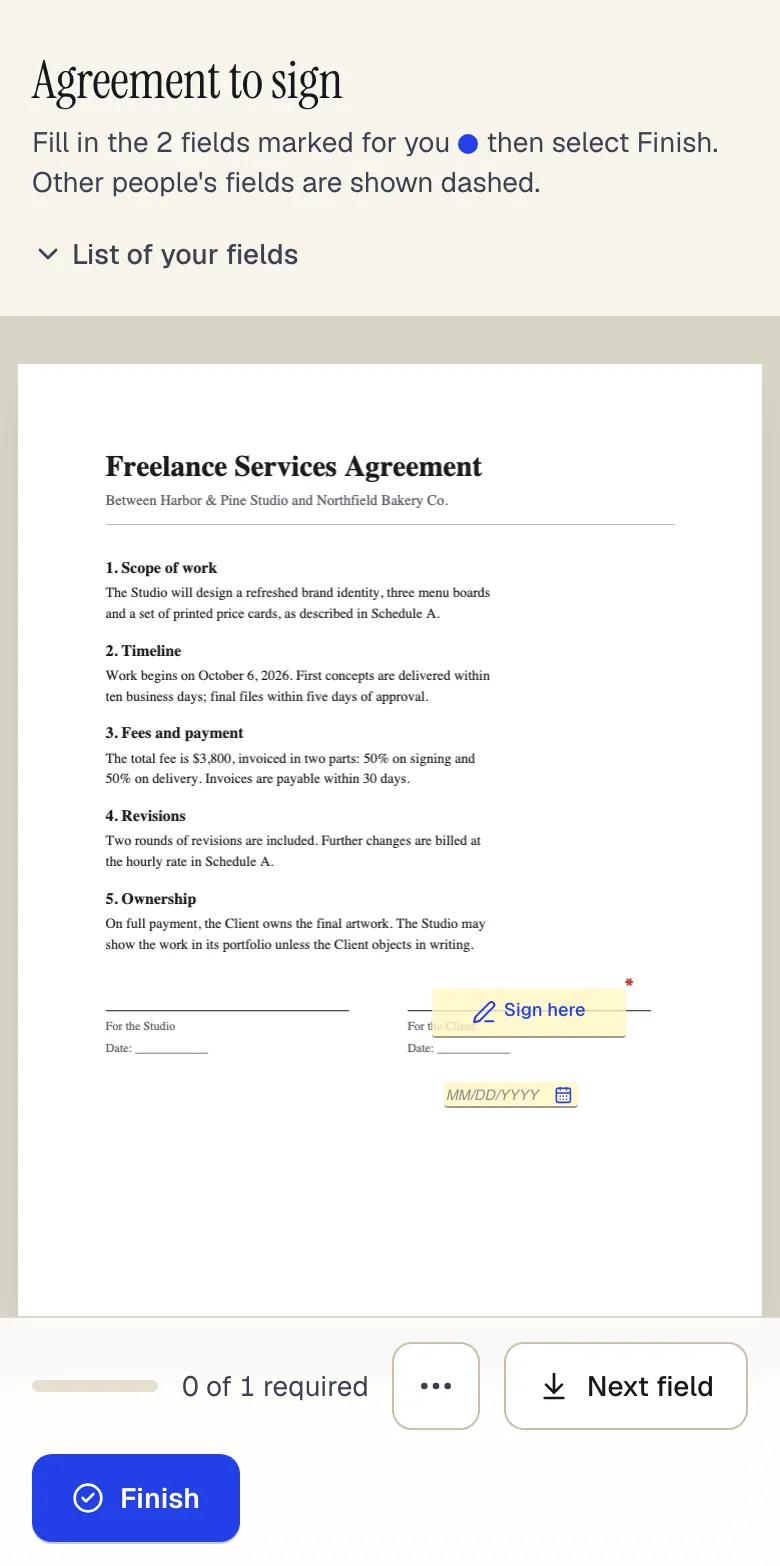
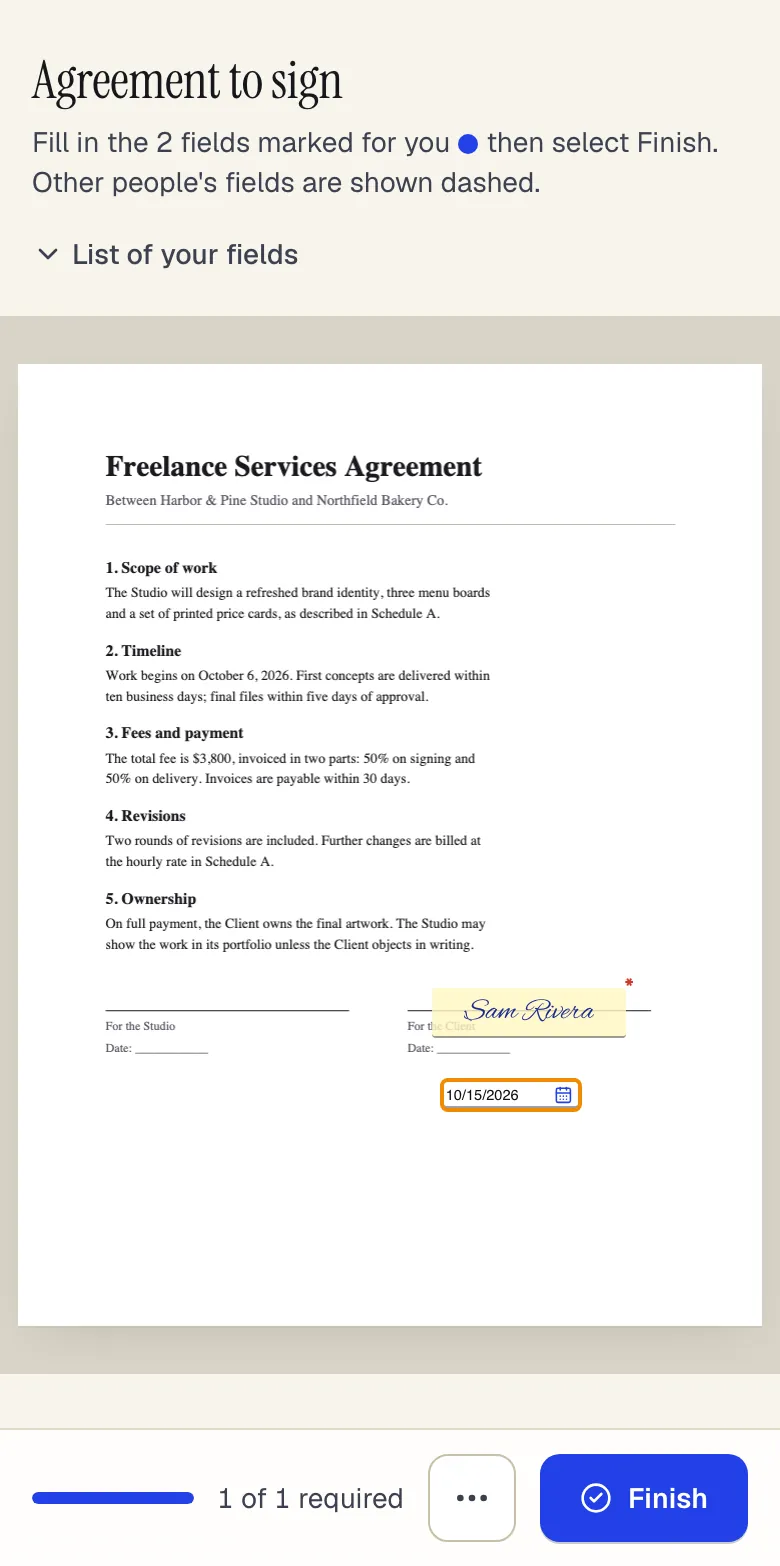
Every PDFBetter signer signs with their own cryptographic key: their browser generates an ECDSA P-256 key that never leaves the device and signs a statement binding the document's SHA-256 fingerprint to exactly what they entered, and PDFBetter's certificate authority certifies that key. Every completed PDF and its certificate of completion are digitally sealed with a PAdES signature and, when the service is reachable, independently time-stamped under RFC 3161, so any change shows in PDF readers. The evidence is built into the file: signed statements, device signatures, certificates, entered values and a hash-chained audit log of every view, consent, signature and decline with time and IP address. Signers consent to sign electronically first, the sender can require an emailed 6-digit code, and completed evidence is kept for 7 years. Signature requests are designed to the technical requirements of an advanced electronic signature (eIDAS art. 26): a unique key per signer, under their sole control, linked to the document so any change is detectable. Signers are identified by email (and an optional emailed code), not by ID documents or SMS.
A PDFBetter signature is not an ICP-Brasil signature, so it doesn't carry the statutory presumption of MP 2.200-2 art. 10 §1. Its validity rests on §2: the parties' acceptance of the method, which is why each signer explicitly consents to sign electronically.
PDFBetter does not create qualified electronic signatures (QES) and does not offer SMS codes, phone authentication, knowledge-based questions or government ID checks. Its seal certificate comes from PDFBetter's own certificate authority, not a government-accredited one, and is not yet on Adobe's trust list, so Acrobat shows the seal's identity as not verified while still detecting changes. Where a law requires a qualified or accredited signature, verified identity, a notary, wet ink or a witness, use a process that provides it.
This page summarizes what the law generally says, with links to the official texts. PDFBetter is not a law firm; for an important or unusual document, check with a lawyer qualified where the document will be relied on.
What PDFBetter gives you as evidence
Every signer signs with their own cryptographic key, bound to the document’s SHA-256 fingerprint, after recorded consent and an optional emailed code. The completed PDF and certificate of completion are digitally sealed and independently time-stamped, with the hash-chained audit trail built into the file. Designed to the technical requirements of an advanced electronic signature (eIDAS art. 26); signers are identified by email (and an optional emailed code), not by ID documents or SMS. Not a qualified signature (QES).
E-signatures in Brazil: questions people ask
Do I need an ICP-Brasil certificate to sign a contract?
Not for most private contracts. MP 2.200-2 accepts other methods when the parties admit them as valid. ICP-Brasil signatures are presumed authentic and are required for some acts with public bodies.
What is the difference between advanced and qualified signatures in Brazil?
Under Lei 14.063/2020, a qualified signature uses an ICP-Brasil certificate. An advanced signature may use other certificates or methods but must be uniquely linked to and under the control of the signer, with later changes detectable.
Can I buy property with an electronic signature?
Real-estate transfers above the Civil Code threshold require a public deed and registration. Notaries can execute these electronically through e-Notariado, but a simple e-signature on a private PDF is not a substitute.
Do electronically signed contracts need witnesses to be enforceable?
Since 2023, CPC art. 784 §4 says electronic enforceable instruments signed with any legally recognized signature don't need witnesses when a signature provider verifies integrity. Check whether that applies to your instrument.
Is PDFBetter's signature advanced or qualified under Brazilian law?
It is not qualified: it uses no ICP-Brasil certificate. Each PDFBetter signer signs with their own cryptographic key, and every completed PDF is digitally sealed and independently time-stamped, with the evidence built into the file. How a Brazilian court or counterparty classifies it under Law 14.063/2020 depends on the case and on what the parties accepted.