
E-signature legality · Mexico
Are electronic signatures legal in Mexico?
Reviewed
In short
Yes, generally. Mexico's Commercial Code accepts data messages as satisfying written-form requirements and signatures when they can be attributed to the parties and kept intact, and defines an advanced or reliable electronic signature with stronger presumptions. The Federal Civil Code has an equivalent rule. Acts that must be formalized before a notary, such as real-estate transfers, still require the notary, who may use electronic messages under defined conditions.
The law
Laws that apply
- 2000Código de Comercio, Libro Segundo, Título II “Del Comercio Electrónico” (arts. 89–114)
Art. 93: a data message satisfies written-form and signature requirements when attributable to the parties and accessible; art. 97 sets the requirements for an advanced or reliable electronic signature. Electronic-signature provisions added in 2000 and expanded in 2003.
Source: diputados.gob.mx
- 2000Código Civil Federal, art. 1834 bis
Written-form requirements in civil matters can be met by electronic means if the information is attributable to the parties and accessible for later consultation.
Source: diputados.gob.mx
- 2012Ley de Firma Electrónica Avanzada
Governs advanced electronic signatures used by and with federal public bodies; commercial acts remain under the Commercial Code.
Source: diputados.gob.mx
Generally fine to sign electronically
- Commercial contracts and purchase orders between merchants
- Service agreements and NDAs
- Employment-related documents, subject to labor-law form rules
- Consumer terms and online agreements
Exceptions and extra formalities
- Acts that must be formalized in a public deed before a notary (escritura pública), such as transfers of real property
- Matters where a specific law requires a handwritten signature or another particular form
- Tax, customs and similar filings, which use the government's own e.firma and electronic systems
- Documents to be relied on in court where an advanced signature or NOM-151 conservation evidence may be expected
In practice
Things to know
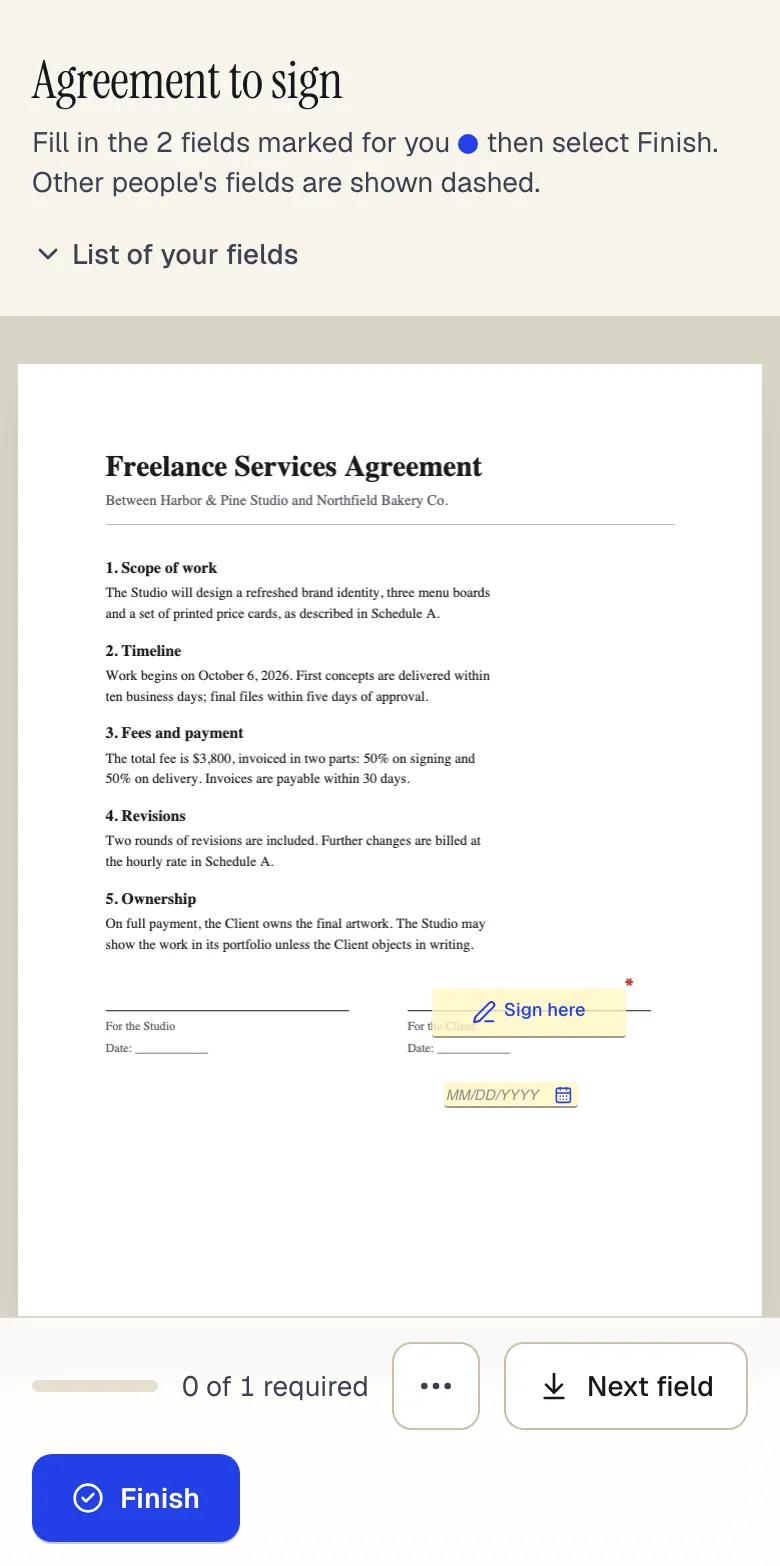
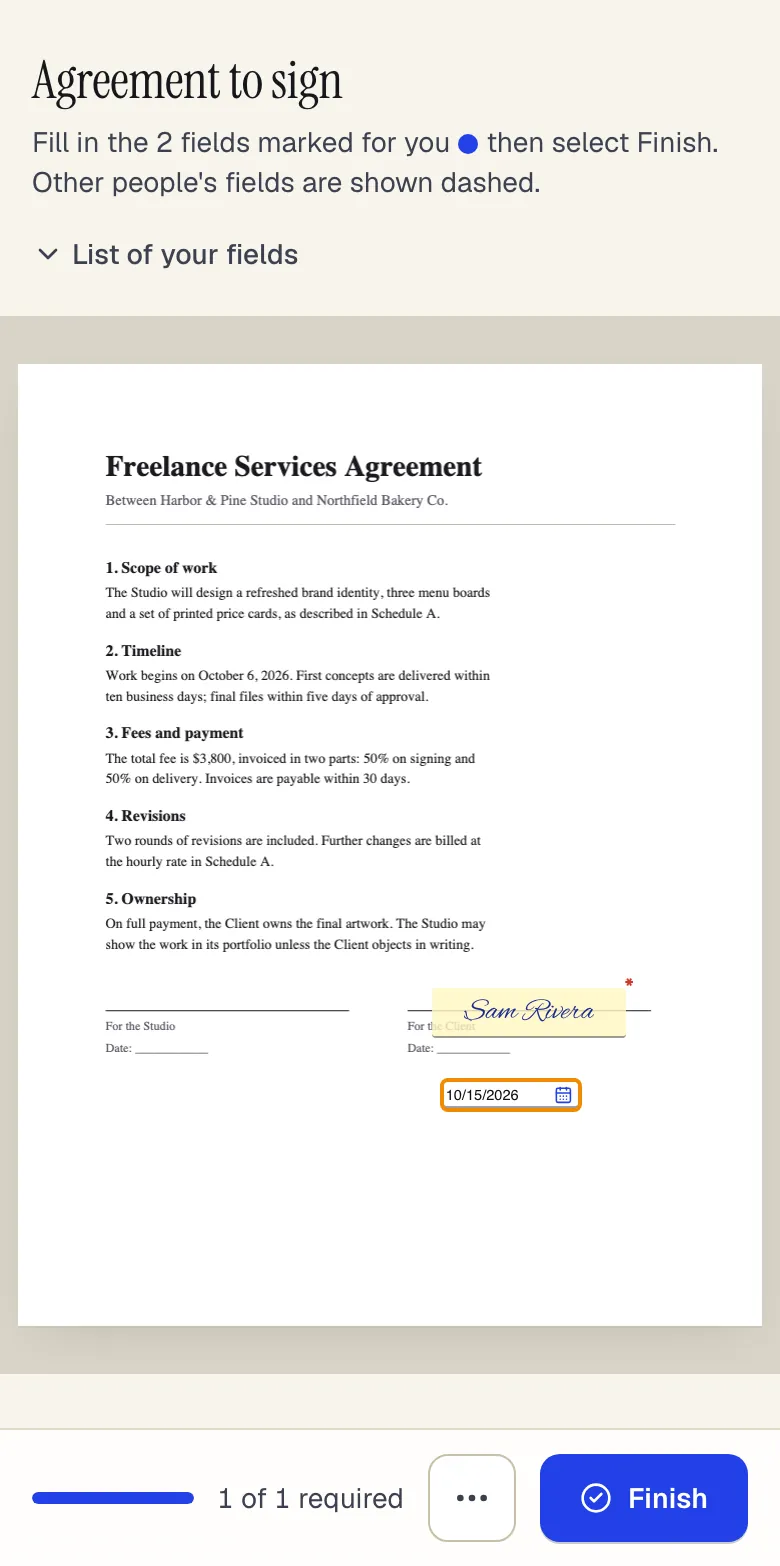
Every PDFBetter signer signs with their own cryptographic key: their browser generates an ECDSA P-256 key that never leaves the device and signs a statement binding the document's SHA-256 fingerprint to exactly what they entered, and PDFBetter's certificate authority certifies that key. Every completed PDF and its certificate of completion are digitally sealed with a PAdES signature and, when the service is reachable, independently time-stamped under RFC 3161, so any change shows in PDF readers. The evidence is built into the file: signed statements, device signatures, certificates, entered values and a hash-chained audit log of every view, consent, signature and decline with time and IP address. Signers consent to sign electronically first, the sender can require an emailed 6-digit code, and completed evidence is kept for 7 years. Signature requests are designed to the technical requirements of an advanced electronic signature (eIDAS art. 26): a unique key per signer, under their sole control, linked to the document so any change is detectable. Signers are identified by email (and an optional emailed code), not by ID documents or SMS.
Mexican practice often relies on NOM-151-SCFI-2016 conservation certificates issued by accredited providers to prove a data message hasn't changed since a given time. PDFBetter's SHA-256 fingerprints and audit log are its own evidence, not a NOM-151 certificate or an e.firma.
PDFBetter does not create qualified electronic signatures (QES) and does not offer SMS codes, phone authentication, knowledge-based questions or government ID checks. Its seal certificate comes from PDFBetter's own certificate authority, not a government-accredited one, and is not yet on Adobe's trust list, so Acrobat shows the seal's identity as not verified while still detecting changes. Where a law requires a qualified or accredited signature, verified identity, a notary, wet ink or a witness, use a process that provides it.
This page summarizes what the law generally says, with links to the official texts. PDFBetter is not a law firm; for an important or unusual document, check with a lawyer qualified where the document will be relied on.
What PDFBetter gives you as evidence
Every signer signs with their own cryptographic key, bound to the document’s SHA-256 fingerprint, after recorded consent and an optional emailed code. The completed PDF and certificate of completion are digitally sealed and independently time-stamped, with the hash-chained audit trail built into the file. Designed to the technical requirements of an advanced electronic signature (eIDAS art. 26); signers are identified by email (and an optional emailed code), not by ID documents or SMS. Not a qualified signature (QES).
E-signatures in Mexico: questions people ask
Is a simple electronic signature valid in Mexico?
Generally yes for commercial and civil acts that don't require a special form, when the message can be attributed to the parties and kept intact. Advanced signatures carry stronger presumptions.
What is a firma electrónica avanzada?
A signature whose creation data is linked only to the signer and under their exclusive control, with changes to the signature and the data detectable (Commercial Code art. 97). The SAT's e.firma is a common example.
What is NOM-151?
A Mexican standard for conserving data messages, under which accredited providers issue certificates proving a document existed unchanged at a given time. It is often used to strengthen evidence for electronic contracts.
Can I sell real estate with an electronic signature?
The transfer itself must be executed before a notary in a public deed. Preliminary agreements may be signed electronically depending on their terms.
Does PDFBetter issue NOM-151 certificates?
No. Each PDFBetter signer signs with their own cryptographic key, and every completed PDF is digitally sealed and independently time-stamped, with the evidence built into the file. Its time-stamps come from an independent RFC 3161 authority, not a NOM-151 conservation-certificate provider.