
E-signature legality · Japan
Are electronic signatures legal in Japan?
Reviewed
In short
Yes, generally. Japanese contract law doesn't require a particular form for most contracts, and the Act on Electronic Signatures and Certification Business (2000) defines electronic signatures and presumes an electronic record authentic when it bears the principal's own electronic signature meeting the Act's conditions. Government guidance from 2020 explains when cloud signing services, where the provider signs on the user's instruction, can qualify. A few documents still require notarial deeds or other specific forms.
The law
Laws that apply
- 2000Act on Electronic Signatures and Certification Business (電子署名及び認証業務に関する法律), Act No. 102 of 2000
Art. 2 defines an electronic signature; art. 3 presumes a private electronic record authentic when it bears the principal's electronic signature that only the principal can perform with proper management.
Source: laws.e-gov.go.jp
- 1996Code of Civil Procedure (民事訴訟法), art. 228(4)
A private document bearing the principal's signature or seal is presumed authentic; the 2000 Act extends a similar presumption to electronic records.
Source: laws.e-gov.go.jp
- 2020Ministry of Justice: Q&A on Articles 2 and 3 of the Electronic Signatures Act
Joint guidance (July and September 2020, art. 3 Q&A partly revised in January 2024) on when provider-signed cloud services count as the user's signature and can receive the art. 3 presumption.
Source: moj.go.jp
- 1991Act on Land and Building Leases (借地借家法), arts. 22–23
General fixed-term land leases may now be made by electronic record; business-use fixed-term land leases still require a notarial deed.
Source: laws.e-gov.go.jp
Generally fine to sign electronically
- Business-to-business contracts, purchase orders and NDAs
- Employment contracts and notices of working conditions delivered electronically where the employee agrees
- General fixed-term land leases and many real-estate brokerage documents after the 2021–2022 digital reforms
- Consumer agreements and terms of service
Exceptions and extra formalities
- Documents that must be notarial deeds (公正証書), such as business-use fixed-term land leases; notarial deeds can be made as electronic records through notary offices from October 2025
- Wills, which follow the Civil Code's formal requirements
- Filings and registrations with government bodies that prescribe their own electronic procedures and certificates
- Situations where a counterparty or regulator requires a registered seal (jitsuin) or certificate-based signature
In practice
Things to know
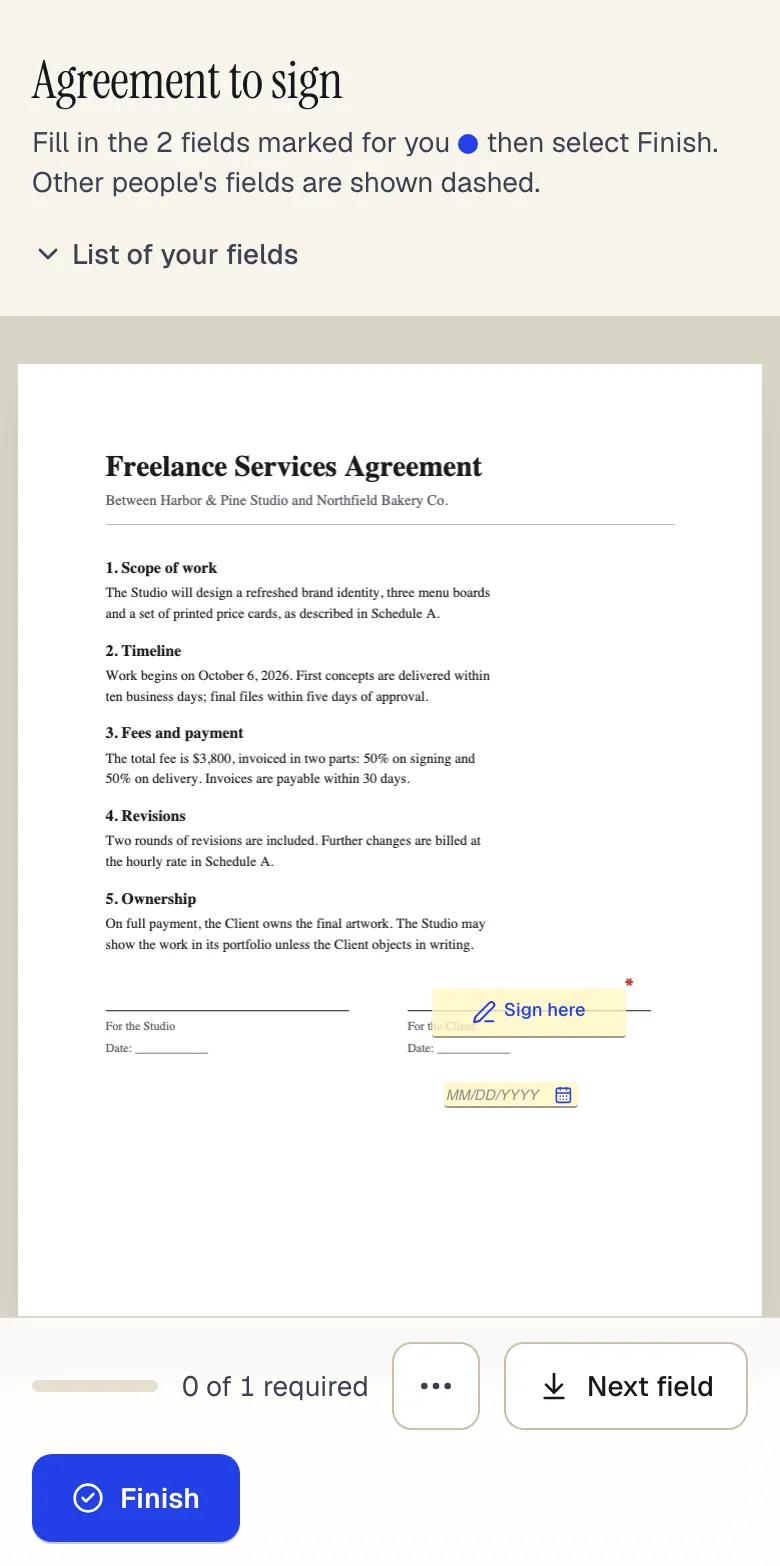
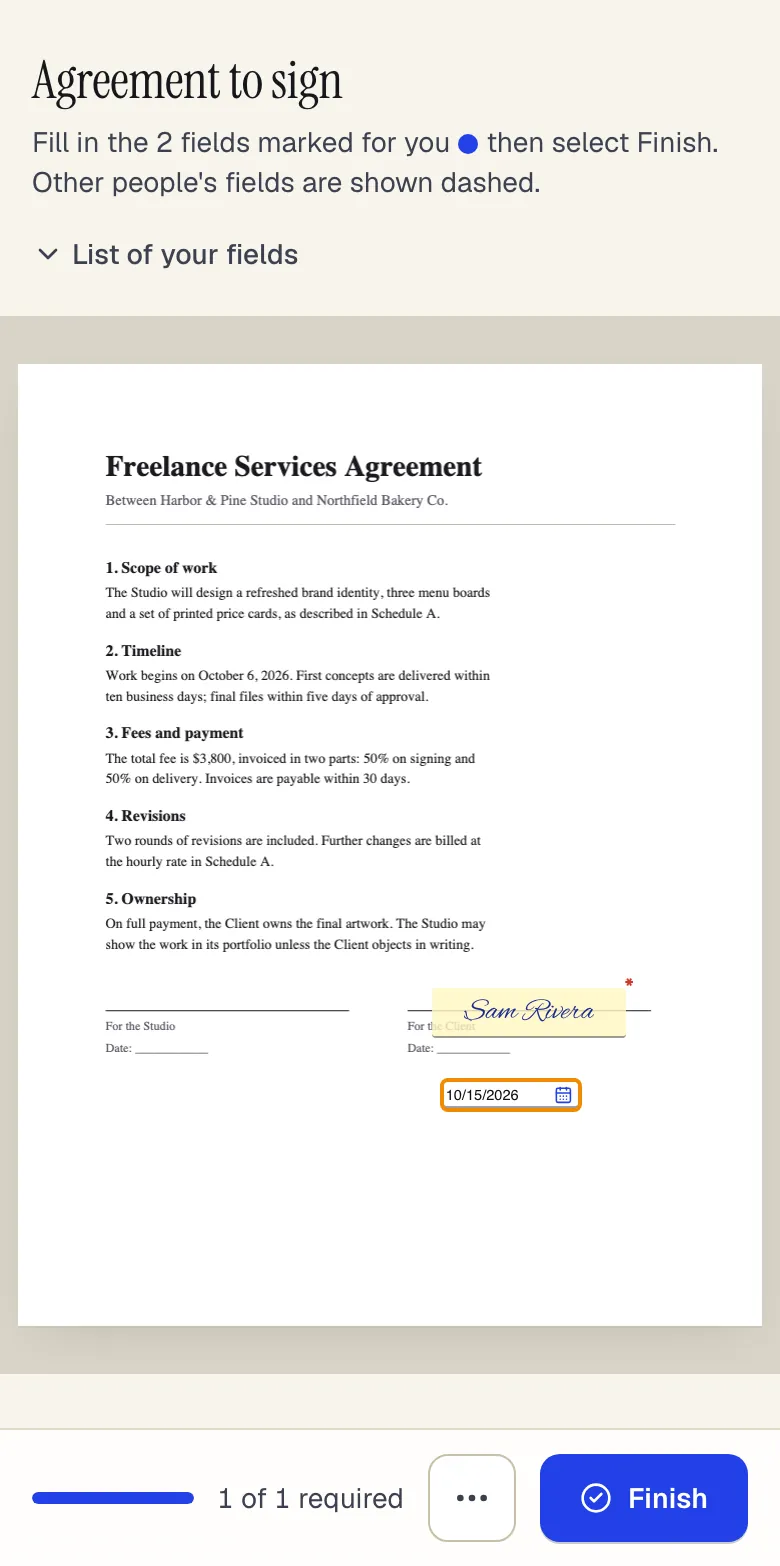
Every PDFBetter signer signs with their own cryptographic key: their browser generates an ECDSA P-256 key that never leaves the device and signs a statement binding the document's SHA-256 fingerprint to exactly what they entered, and PDFBetter's certificate authority certifies that key. Every completed PDF and its certificate of completion are digitally sealed with a PAdES signature and, when the service is reachable, independently time-stamped under RFC 3161, so any change shows in PDF readers. The evidence is built into the file: signed statements, device signatures, certificates, entered values and a hash-chained audit log of every view, consent, signature and decline with time and IP address. Signers consent to sign electronically first, the sender can require an emailed 6-digit code, and completed evidence is kept for 7 years. Signature requests are designed to the technical requirements of an advanced electronic signature (eIDAS art. 26): a unique key per signer, under their sole control, linked to the document so any change is detectable. Signers are identified by email (and an optional emailed code), not by ID documents or SMS.
Japanese business practice has long relied on seals (hanko). The law doesn't generally require a seal for a contract to be valid; seals and electronic signatures mainly serve as evidence of authenticity. Check whether your counterparty or a regulator expects a specific method.
PDFBetter does not create qualified electronic signatures (QES) and does not offer SMS codes, phone authentication, knowledge-based questions or government ID checks. Its seal certificate comes from PDFBetter's own certificate authority, not a government-accredited one, and is not yet on Adobe's trust list, so Acrobat shows the seal's identity as not verified while still detecting changes. Where a law requires a qualified or accredited signature, verified identity, a notary, wet ink or a witness, use a process that provides it.
This page summarizes what the law generally says, with links to the official texts. PDFBetter is not a law firm; for an important or unusual document, check with a lawyer qualified where the document will be relied on.
What PDFBetter gives you as evidence
Every signer signs with their own cryptographic key, bound to the document’s SHA-256 fingerprint, after recorded consent and an optional emailed code. The completed PDF and certificate of completion are digitally sealed and independently time-stamped, with the hash-chained audit trail built into the file. Designed to the technical requirements of an advanced electronic signature (eIDAS art. 26); signers are identified by email (and an optional emailed code), not by ID documents or SMS. Not a qualified signature (QES).
E-signatures in Japan: questions people ask
Do contracts in Japan need a hanko seal?
Generally no. Most contracts are valid without a particular form; a seal is evidence of authenticity, not a validity requirement. Electronic signatures can serve the same evidentiary role.
Do cloud e-signature services qualify under Japan's Electronic Signatures Act?
Government Q&A published in 2020 explains that provider-signed services can count as the user's electronic signature, and can receive the art. 3 presumption, when the process is sufficiently tied to the user. Whether a specific service meets that depends on how it works.
Which documents still need special form in Japan?
Notarial deeds, such as for business-use fixed-term land leases, wills, and documents where a specific law or authority prescribes the method.
Can employment contracts be signed electronically in Japan?
Generally yes, and working conditions can be provided electronically if the employee wishes. Check the current Labor Standards Act rules for your situation.
Does a PDFBetter signature get the Article 3 presumption?
That depends on how a court assesses the process. Each PDFBetter signer signs with their own cryptographic key, and every completed PDF is digitally sealed and independently time-stamped, with the evidence built into the file. The signer keys and the seal are certified by PDFBetter's own certificate authority, not an accredited certification business.