
E-signature legality · Germany
Are electronic signatures legal in Germany?
Reviewed
In short
Yes, for most contracts. Most German contracts have no form requirement, so a simple electronic signature can generally be used, and eIDAS applies directly. Where the law requires written form (Schriftform, BGB §126), an electronic version needs a qualified electronic signature (§126a), and some documents can't be signed electronically at all, such as employment terminations and holographic wills. Since 2025, several requirements were relaxed to text form (§126b).
The law
Laws that apply
- 2014Regulation (EU) No 910/2014 (eIDAS)
Directly applicable: electronic signatures can't be denied legal effect solely because they are electronic; qualified signatures have the effect of handwritten ones.
Source: eur-lex.europa.eu
- 1900Bürgerliches Gesetzbuch (BGB) §126 Schriftform
Written form needs a handwritten signature; electronic form may replace it unless the law excludes this.
Source: gesetze-im-internet.de
- 2001BGB §126a Elektronische Form
Electronic form replaces written form only with the issuer's name and a qualified electronic signature.
Source: gesetze-im-internet.de
- 2001BGB §126b Textform
Text form: a readable declaration naming the person, on a durable medium; no signature needed. Email or a PDF generally qualifies.
Source: gesetze-im-internet.de
- 2017Vertrauensdienstegesetz (VDG)
German act implementing eIDAS for trust services; supervision by the Federal Network Agency (Bundesnetzagentur).
Source: gesetze-im-internet.de
Generally fine to sign electronically
- Most commercial contracts, purchase orders and NDAs, which have no statutory form requirement
- Employment contracts, with the written statement of essential terms possible in text form since 2025 (with exceptions for certain sectors)
- Commercial leases of more than one year, which need only text form since 1 January 2025
- Consumer contracts and terms of service
- Documents requiring written form, if signed with a qualified electronic signature and electronic form isn't excluded
Exceptions and extra formalities
- Termination of an employment relationship and termination agreements (BGB §623: electronic form excluded)
- Declarations of guarantee (Bürgschaft) under BGB §766, where electronic form is excluded, subject to the merchant exception
- Contracts to buy or sell land, which require notarial recording (BGB §311b)
- Holographic wills, which must be handwritten and signed (BGB §2247); notarial wills follow notarial procedures
- Other notarized or publicly certified documents, which follow notarial procedures
- Any contract where the statute requires written form and you sign with only a simple or advanced electronic signature
In practice
Things to know
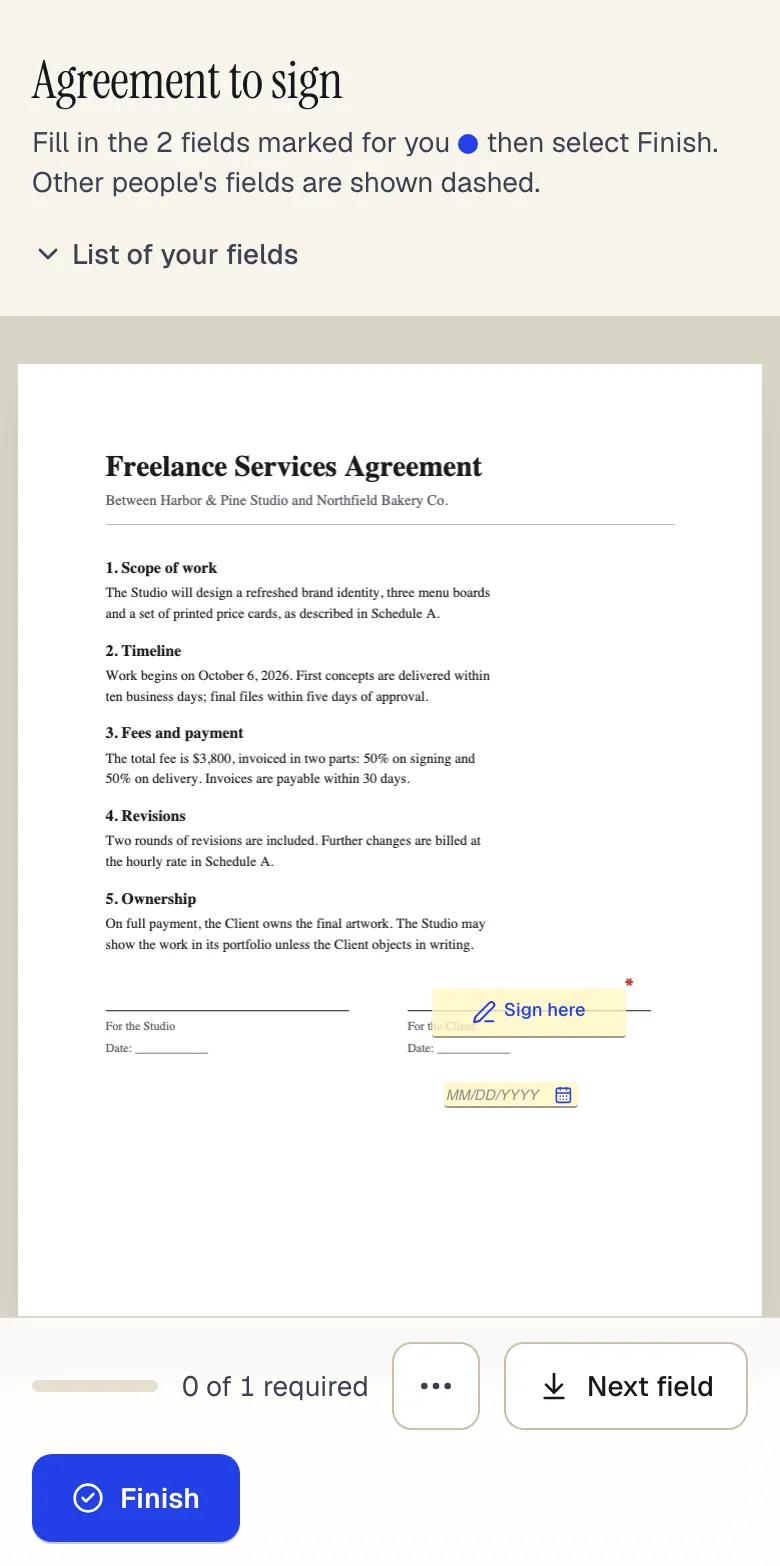
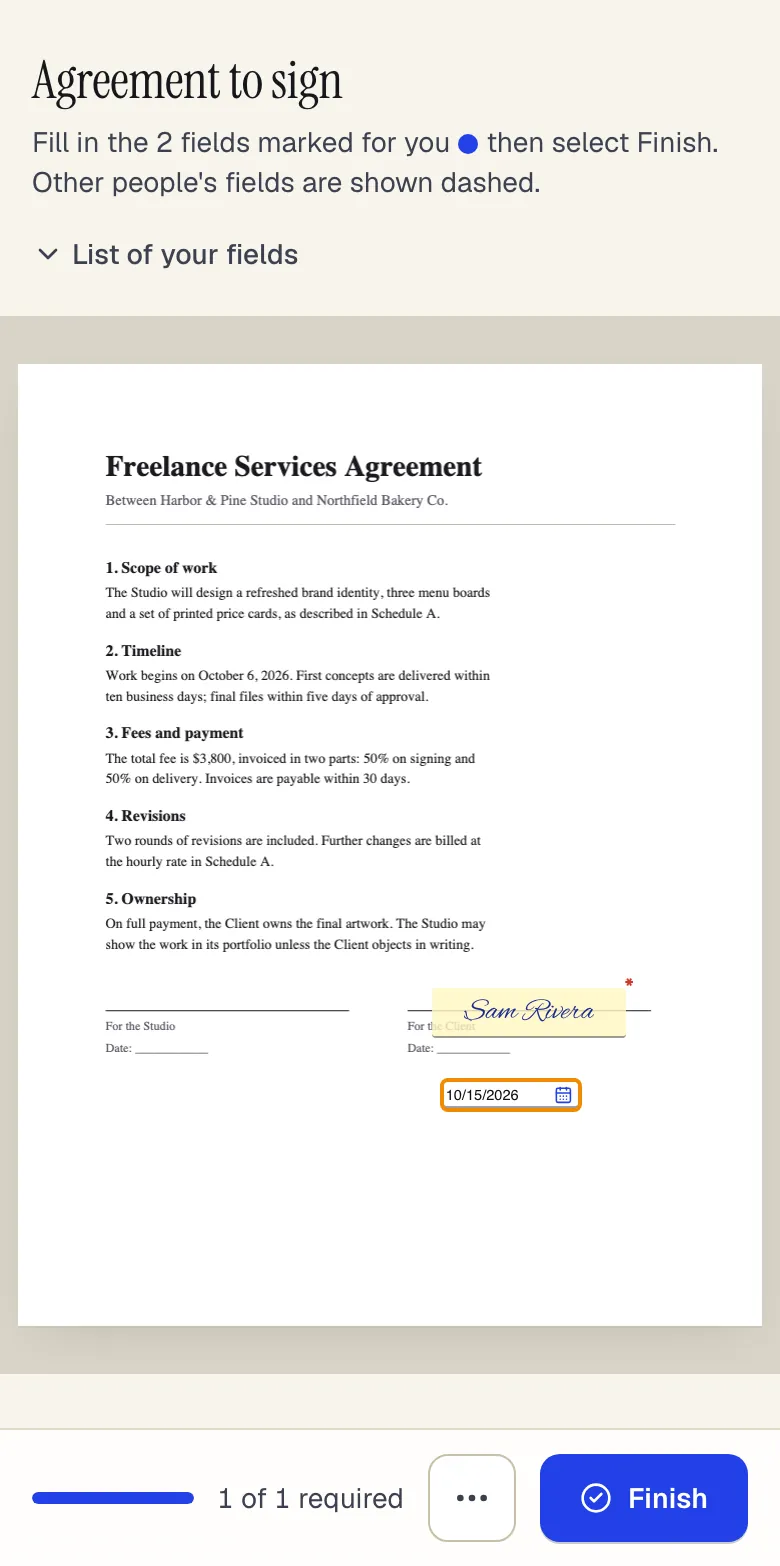
Every PDFBetter signer signs with their own cryptographic key: their browser generates an ECDSA P-256 key that never leaves the device and signs a statement binding the document's SHA-256 fingerprint to exactly what they entered, and PDFBetter's certificate authority certifies that key. Every completed PDF and its certificate of completion are digitally sealed with a PAdES signature and, when the service is reachable, independently time-stamped under RFC 3161, so any change shows in PDF readers. The evidence is built into the file: signed statements, device signatures, certificates, entered values and a hash-chained audit log of every view, consent, signature and decline with time and IP address. Signers consent to sign electronically first, the sender can require an emailed 6-digit code, and completed evidence is kept for 7 years. Signature requests are designed to the technical requirements of an advanced electronic signature (eIDAS art. 26): a unique key per signer, under their sole control, linked to the document so any change is detectable. Signers are identified by email (and an optional emailed code), not by ID documents or SMS.
In Germany the key question is the form a document requires. No form or text form: a simple electronic signature is generally fine. Written form: you need a qualified electronic signature, or handwriting. PDFBetter doesn't provide qualified signatures, so use it only where written form isn't required.
PDFBetter does not create qualified electronic signatures (QES) and does not offer SMS codes, phone authentication, knowledge-based questions or government ID checks. Its seal certificate comes from PDFBetter's own certificate authority, not a government-accredited one, and is not yet on Adobe's trust list, so Acrobat shows the seal's identity as not verified while still detecting changes. Where a law requires a qualified or accredited signature, verified identity, a notary, wet ink or a witness, use a process that provides it.
This page summarizes what the law generally says, with links to the official texts. PDFBetter is not a law firm; for an important or unusual document, check with a lawyer qualified where the document will be relied on.
What PDFBetter gives you as evidence
Every signer signs with their own cryptographic key, bound to the document’s SHA-256 fingerprint, after recorded consent and an optional emailed code. The completed PDF and certificate of completion are digitally sealed and independently time-stamped, with the hash-chained audit trail built into the file. Designed to the technical requirements of an advanced electronic signature (eIDAS art. 26); signers are identified by email (and an optional emailed code), not by ID documents or SMS. Not a qualified signature (QES).
E-signatures in Germany: questions people ask
Is a simple electronic signature valid in Germany?
Yes, for contracts without a statutory form requirement, which covers most commercial agreements. Its evidential weight is assessed freely by the court.
When do I need a qualified electronic signature in Germany?
When a statute requires written form (Schriftform) and doesn't exclude electronic form. A qualified signature then satisfies the requirement under BGB §126a; a simple or advanced one does not. Check the specific statute for your document.
Can an employment termination be signed electronically?
No. BGB §623 requires written form with a handwritten signature for terminations and termination agreements and excludes electronic form.
What changed in 2025?
The Fourth Bureaucracy Relief Act moved some written-form requirements to text form from 1 January 2025, including commercial leases over one year and the written statement of essential employment terms in many sectors.
Does PDFBetter offer QES for German contracts?
No. PDFBetter signature requests are designed to the technical requirements of an advanced electronic signature (eIDAS art. 26): a unique key per signer, under their sole control, linked to the document so any change is detectable. Signers are identified by email (and an optional emailed code), not by ID documents or SMS. That does not satisfy written form (§126a BGB), which needs a QES.