
E-signature legality · United States
Are electronic signatures legal in the United States?
Reviewed
In short
Yes, generally. The federal ESIGN Act (2000) says a signature, contract or record relating to interstate or foreign commerce may not be denied legal effect solely because it is electronic, and nearly every state has adopted the Uniform Electronic Transactions Act (UETA), with New York relying on its own Electronic Signatures and Records Act. Some documents are excluded, including wills, family-law matters, court documents and certain consumer notices, and nobody is required to agree to use electronic signatures.
The law
Laws that apply
- 2000Electronic Signatures in Global and National Commerce Act (ESIGN), 15 U.S.C. §7001 et seq.
§7001(a): no denial of legal effect solely because electronic; §7001(c): consumer consent and disclosure rules where a law requires information in writing; §7003: excluded documents.
Source: govinfo.gov
- 1999Uniform Electronic Transactions Act (UETA), Uniform Law Commission
Model act adopted, with local variations, as state law in nearly every state, the District of Columbia and the U.S. Virgin Islands; Washington adopted it in 2020. ESIGN defers to states that enact UETA as approved.
Source: uniformlaws.org
- 1999New York Electronic Signatures and Records Act (ESRA), State Technology Law Article 3
New York's own law instead of UETA. §304: an electronic signature has the same validity and effect as a handwritten one; §307 lists exclusions such as wills, trusts, powers of attorney and negotiable instruments.
Source: nysenate.gov
Generally fine to sign electronically
- Sales, service and employment contracts
- Offer letters, onboarding forms and HR policies
- Residential and commercial leases
- Purchase orders, invoices and vendor agreements
- Consumer agreements, once the consumer has consented to electronic records as ESIGN requires
- Real-estate purchase agreements, with closing documents subject to county recording and notary rules
Exceptions and extra formalities
- Wills, codicils and testamentary trusts (ESIGN §7003(a)(1)); some states have separate electronic-wills statutes with their own requirements
- Adoption, divorce and other family-law matters (§7003(a)(2))
- Court orders, notices and official court documents such as briefs and pleadings (§7003(b)(1)), which follow court e-filing rules
- Notices of utility shutoff; default, foreclosure, eviction or repossession on a primary residence; and cancellation of health or life insurance (§7003(b)(2))
- Product recall notices and documents that must accompany hazardous materials (§7003(b)(2)–(3))
- Most Uniform Commercial Code transactions other than sales and leases of goods (§7003(a)(3))
- Documents that must be notarized or witnessed, unless the state's remote or electronic notarization rules are followed
In practice
Things to know
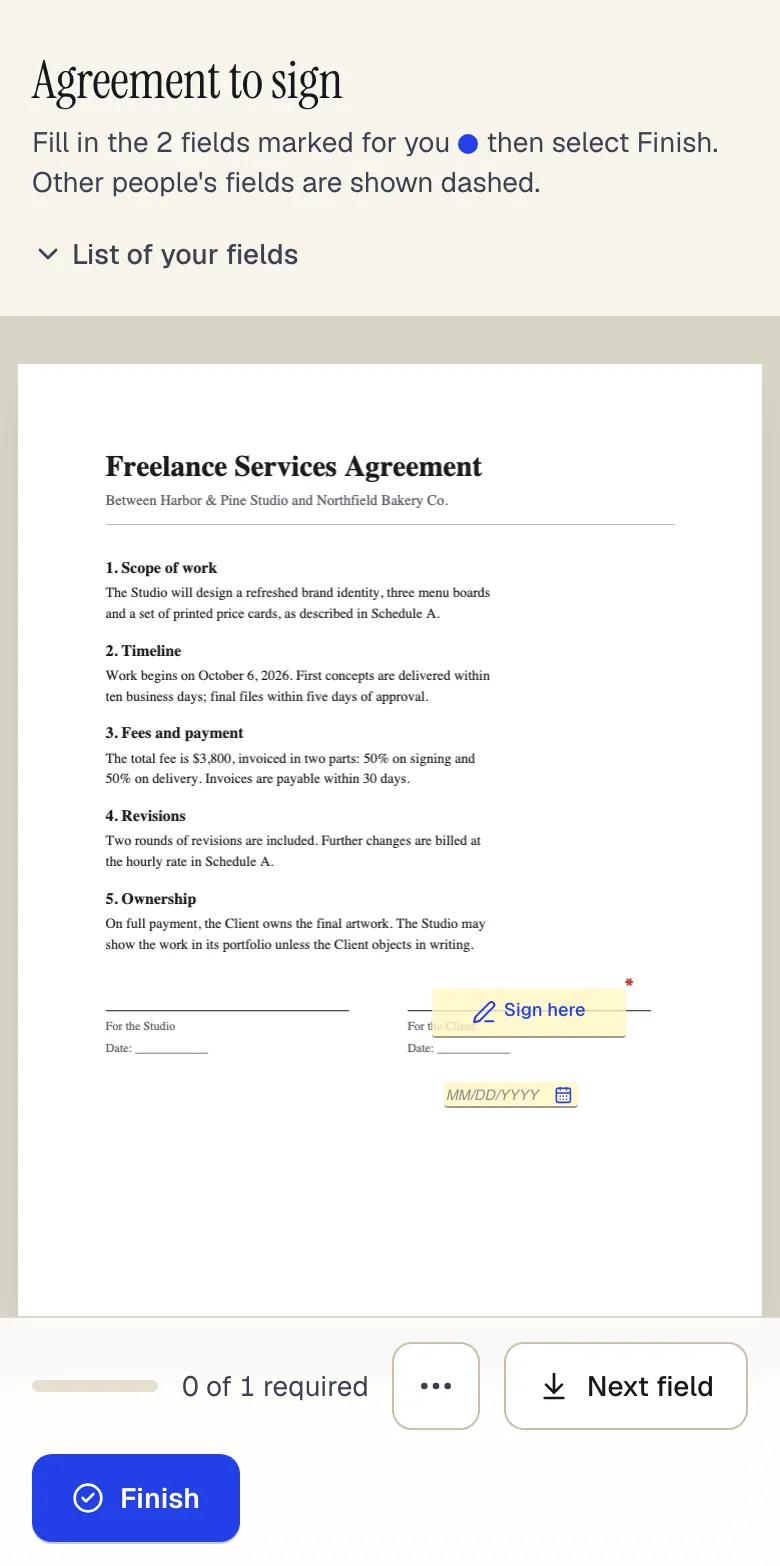
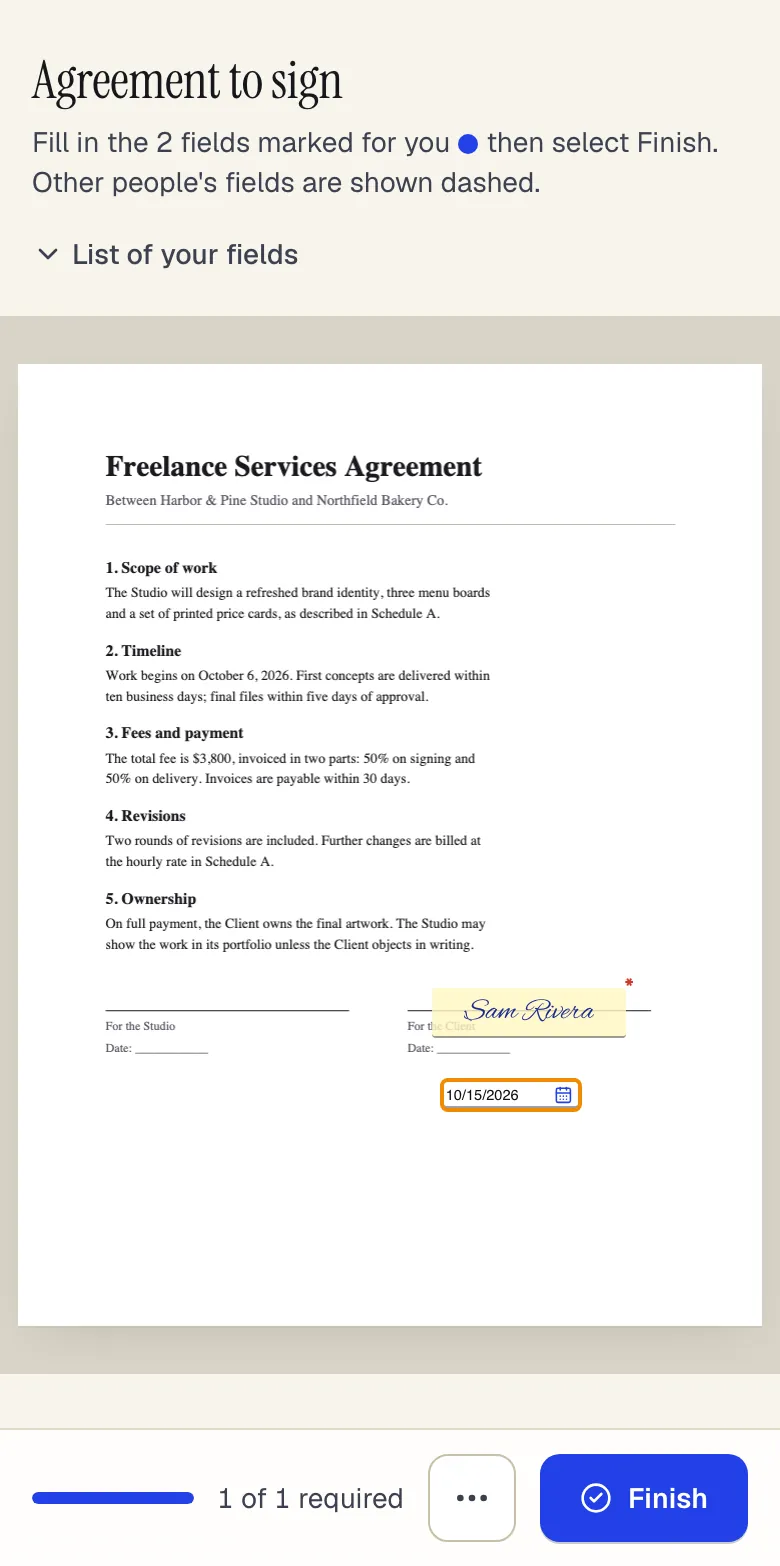
Every PDFBetter signer signs with their own cryptographic key: their browser generates an ECDSA P-256 key that never leaves the device and signs a statement binding the document's SHA-256 fingerprint to exactly what they entered, and PDFBetter's certificate authority certifies that key. Every completed PDF and its certificate of completion are digitally sealed with a PAdES signature and, when the service is reachable, independently time-stamped under RFC 3161, so any change shows in PDF readers. The evidence is built into the file: signed statements, device signatures, certificates, entered values and a hash-chained audit log of every view, consent, signature and decline with time and IP address. Signers consent to sign electronically first, the sender can require an emailed 6-digit code, and completed evidence is kept for 7 years. Signature requests are designed to the technical requirements of an advanced electronic signature (eIDAS art. 26): a unique key per signer, under their sole control, linked to the document so any change is detectable. Signers are identified by email (and an optional emailed code), not by ID documents or SMS.
ESIGN has specific consumer-consent requirements when a law requires information to be provided to a consumer in writing. PDFBetter's consent step records each signer's agreement to sign electronically; if you send consumer disclosures, check whether ESIGN §7001(c) disclosures also apply to you.
PDFBetter does not create qualified electronic signatures (QES) and does not offer SMS codes, phone authentication, knowledge-based questions or government ID checks. Its seal certificate comes from PDFBetter's own certificate authority, not a government-accredited one, and is not yet on Adobe's trust list, so Acrobat shows the seal's identity as not verified while still detecting changes. Where a law requires a qualified or accredited signature, verified identity, a notary, wet ink or a witness, use a process that provides it.
This page summarizes what the law generally says, with links to the official texts. PDFBetter is not a law firm; for an important or unusual document, check with a lawyer qualified where the document will be relied on.
What PDFBetter gives you as evidence
Every signer signs with their own cryptographic key, bound to the document’s SHA-256 fingerprint, after recorded consent and an optional emailed code. The completed PDF and certificate of completion are digitally sealed and independently time-stamped, with the hash-chained audit trail built into the file. Designed to the technical requirements of an advanced electronic signature (eIDAS art. 26); signers are identified by email (and an optional emailed code), not by ID documents or SMS. Not a qualified signature (QES).
E-signatures in the United States: questions people ask
Is an electronic signature legally binding in the US?
In most cases, yes. ESIGN and state UETA laws say a signature can't be denied legal effect solely because it is electronic. Whether a particular contract is enforceable still depends on ordinary contract law and on proving who signed.
Which US documents can't be signed electronically?
ESIGN excludes wills and testamentary trusts, family-law matters, court documents, certain consumer notices such as utility shutoff and foreclosure notices, product recalls and hazardous-materials documents. State laws can add or vary exclusions.
Do I need the other party's consent?
Yes. Neither ESIGN nor UETA forces anyone to use electronic records; UETA applies to parties who agreed to conduct the transaction electronically. Consumers get extra disclosure and consent protections under ESIGN.
Does New York follow UETA?
No. New York has its own Electronic Signatures and Records Act, which gives electronic signatures the same effect as handwritten ones but excludes documents such as wills, trusts, powers of attorney and negotiable instruments.
Can a notarized document be signed with PDFBetter?
No. Notarization requires a commissioned notary, either in person or through a state-authorized remote online notarization platform. PDFBetter doesn't provide notarization.