
General Consent to Treatment
For outpatient clinics, urgent care and therapy or wellness practices that need a patient's general consent before routine care. Surgery, anesthesia and higher-risk procedures need a separate informed consent discussion and form.
- Fields
- 16
- Pages
- 2
- Paper
- Letter
Fill it online without an account. The blank PDF is free to download and works in any PDF reader. Downloading a filled copy from the editor needs a free account — 3 downloads a month, no watermark. See plans
Reviewed
Before you start
What you need to fill it in
- Practice name
- Patient's name and date of birth
- Representative's name and authority, if signing for a minor or another adult
- Interpreter details, if one was used
What's inside
16 fields, ready to fill
- 10Typed answersnames, addresses, descriptions
- 3Dateschecked as real dates
- 1Choicescheckboxes, options, dropdowns
- 2Signaturessignature and initials
6 required — the editor counts down how many are left while you fill.
Instructions
How to fill out the General Consent to Treatment
- 1
Enter practice and patient
Fill in the practice name and the patient's identifying details.
- 2
Review the statements
The patient reads each statement and asks questions before signing.
- 3
Note any limits
If the patient refuses specific treatments or has an advance directive, record it in the limits box.
- 4
Representative and interpreter
If someone signs for the patient, record their relationship and authority. Record the interpreter's name if one was used.
- 5
Sign and witness
The patient or representative signs; a staff witness signs if your policy requires.
Fill it online
What filling it looks like
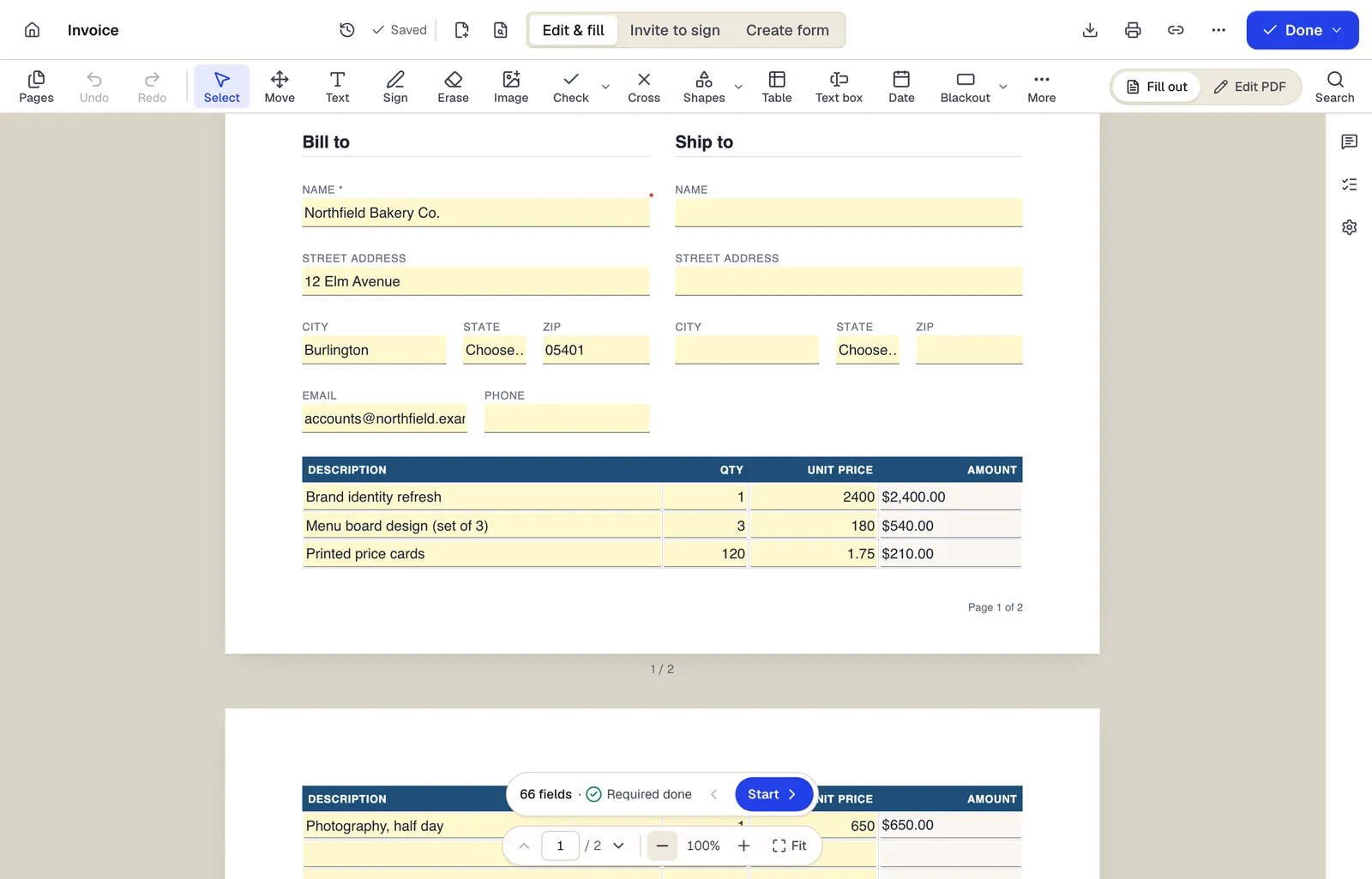
- Edit & fill, Invite to sign and Create form are three modes of the same editor
- Amounts are formula fields: they calculate as you type
- The field navigator counts what's left and jumps to the next field
Shown with our invoice template. Sample content; names are fictional.
Written for: General (US)
This template is a general starting point, not medical or legal advice. HIPAA, state privacy and consent rules vary; have your compliance lead or a qualified professional review it before use.
Written by PDFBetter and last reviewed October 15, 2026. Spotted a problem? Tell us.
General Consent to Treatment: questions people ask
Does this cover surgery or procedures with significant risk?
No. Procedures with material risks require a specific informed consent discussion covering risks, benefits and alternatives, documented on a procedure-specific form.
Who can consent for a minor?
Usually a parent or legal guardian. States allow minors to consent on their own for certain services, such as some reproductive or mental health care; check your state's rules.
Can a patient withdraw consent?
Yes. Patients can refuse or stop treatment at any time, and the form says so. Document the refusal and the information given.
Is a witness required?
Not for general consent in most settings, but many organizations require one by policy. Some states require witnesses for specific treatments.
Can patients sign electronically?
E-signatures are generally valid for consent forms under federal and state law. Confirm your organization's policy and record system support them.
Ready when you are
Fill the General Consent to Treatment now — no account to start.