
Internal Revenue Service (IRS) · United States (federal)
Form 7004: Application for Automatic Extension of Time To File Certain Business Income Tax, Information, and Other Returns
Current revision: Rev. December 2025 (checked on irs.gov, Oct 28, 2026)
Fill in IRS Form 7004 (Rev. December 2025) to extend Form 1120, 1120-S or 1065: form codes, tentative tax, where to file, and 2027 due dates.
Filling needs no account. Downloading, printing or sending the completed form needs a free account — 3 downloads a month, no watermark.
Page reviewed
Form
7004
- Issued by
- Internal Revenue Service (IRS)
- Applies in
- United States (federal)
- Edition
- Rev. December 2025
Official source
PDFBetter is not affiliated with, endorsed by or acting for Internal Revenue Service (IRS). We open the form from irs.gov, and you fill it in our editor. Check the issuer's instructions before you file.
What it is
What Form 7004 is for
Form 7004 gives corporations, partnerships, trusts and certain other filers an automatic extension of time to file, generally 6 months. It must be filed by the original due date of the return, one form per return, and it doesn't extend the time to pay. The December 2025 revision is current and isn't tied to a single tax year. For calendar-year 2026 returns it's due March 15, 2027 for Forms 1065 and 1120-S and April 15, 2027 for Form 1120.
Form 7004 deadlines, 2027 filing season
Form 7004 for calendar-year 2026 Forms 1065 and 1120-S Source: irs.gov
Form 7004 for a calendar-year 2026 Form 1120, with any tax due Source: irs.gov
Extended Forms 1065 and 1120-S due Source: irs.gov
Extended Form 1120 due Source: irs.gov
Dates already move past weekends and DC holidays, as the IRS rule says. Checked against irs.gov on October 28, 2026. See the full 2027 tax calendar.
Fill it here
From irs.gov to your filled copy
- 1
Fetched from irs.gov
The agency's own, current PDF — not a retyped copy.
- 2
Opens in the editor
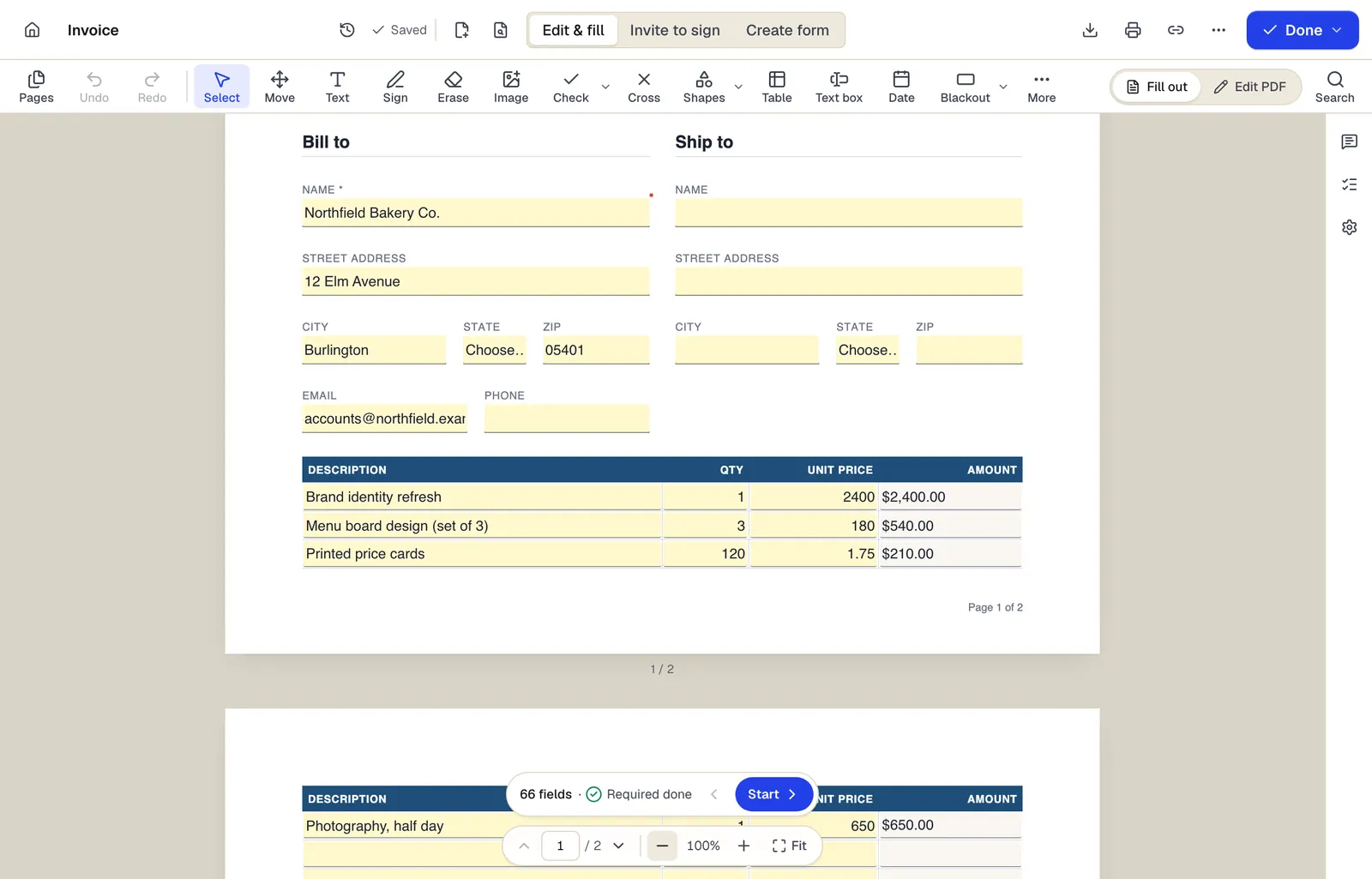
Fillable fields work as they are; on a flat page you type with text boxes.
- 3
Your filled copy
Download, print, sign or send it — the original stays untouched.
Who files it
- Partnerships extending Form 1065 (form code 09)
- C corporations extending Form 1120 (form code 12)
- S corporations extending Form 1120-S (form code 25)
- Trusts and estates extending Form 1041, and filers of the other returns listed in Part I
- The common parent of a consolidated group, for the group's return
What you need
- The entity's name exactly as on last year's return, its EIN and address
- The two-digit form code of the return you're extending
- The tax year (calendar year, or beginning and ending dates for a fiscal or short year)
- An estimate of the total tax for the year
- Payments and refundable credits so far
- A way to pay the balance, such as EFTPS
Line by line
How to fill out Form 7004
- 1
Name and number
Enter the name as it appeared on last year's return and the correct EIN. If they don't match IRS records, the instructions say you won't have a valid extension.
- 2
Part I — Line 1 form code
Enter the two-digit code from the table on the form, for example 09 for Form 1065, 12 for Form 1120 or 25 for Form 1120-S. File a separate Form 7004 for each return.
- 3
Part II — Lines 2–4
Check line 2 for a foreign corporation with no U.S. office, line 3 for the common parent of a consolidated group (attach the member list), and line 4 for entities that qualify under Regulations section 1.6081-5.
- 4
Line 5 — Tax year
Enter the calendar year or the fiscal year dates. For a short tax year, check the reason in 5b.
- 5
Lines 6–8 — Tax and balance due
Enter the tentative total tax (or -0-), total payments and credits, and the balance due on line 8. Pay that balance by the original due date of the return.
- 6
No signature line
The instructions say no signature is required on Form 7004. Check the name, EIN and form code before you file.
Common Form 7004 mistakes
- Using a name or EIN that doesn't match IRS records, which leaves you without a valid extension.
- Entering the wrong form code on line 1, so the extension applies to a different return.
- Trying to cover several returns with one Form 7004; each return needs its own.
- Paying the tax with the extended return instead of by the original due date.
- Filing Form 7004 on paper and the return electronically, which the instructions warn can lead to a penalty notice.
Where to send it
Form 7004 can be e-filed for most returns (see IRS.gov/Efile7004). Paper filers mail it to the address for the return being extended, the state of the principal business and total assets: https://www.irs.gov/filing/where-to-file-form-7004. File by the return's original due date: March 15, 2027 for calendar-year 2026 Forms 1065 and 1120-S, April 15, 2027 for Form 1120. Pay any balance due electronically, generally through EFTPS. The IRS doesn't send an approval; it writes only if it denies the request.
Filing rules change. Confirm the address or portal on irs.gov before you send.
Form 7004: questions people ask
How long is the extension?
Generally 6 months. Exceptions: estates and trusts filing Form 1041 get 5½ months, and C corporations with tax years ending June 30 that began before January 1, 2026 get 7 months; for tax years beginning in 2026 it's 6 months.
Does Form 7004 give us more time to pay?
No. Tax is due by the original due date, and interest runs from that date. A corporation avoids the late-payment penalty if it paid at least 90% of its tax by the regular due date and pays the rest by the extended date.
Do we need to sign it?
No. The instructions say no signature is required on Form 7004.
Will the IRS confirm the extension?
No. The IRS no longer sends approval notices and writes only if it disallows the request. Keep proof of when and how you filed.
Is this the form for an individual extension?
No. Individuals use Form 4868 to extend Form 1040. Form 7004 is for business income tax, information and certain other returns listed in Part I.
Which revision should we use for the 2027 season?
The December 2025 revision is the current one on irs.gov and covers the returns listed on line 1. It isn't tied to a single tax year, so check irs.gov/Form7004 for any update before you file.