
Internal Revenue Service (IRS) · United States (federal)
Form 1099-K: Payment Card and Third Party Network Transactions
Current revision: Rev. December 2026 (checked on irs.gov, Oct 28, 2026)
IRS Form 1099-K (Rev. December 2026): the $20,000 and 200-transaction rule for payment apps, new cash tip boxes 1c–1d, and the 2027 due dates.
Filling needs no account. Downloading, printing or sending the completed form needs a free account — 3 downloads a month, no watermark.
Page reviewed
Form
1099-K
- Issued by
- Internal Revenue Service (IRS)
- Applies in
- United States (federal)
- Edition
- Rev. December 2026
Official source
PDFBetter is not affiliated with, endorsed by or acting for Internal Revenue Service (IRS). We open the form from irs.gov, and you fill it in our editor. Check the issuer's instructions before you file.
What it is
What Form 1099-K is for
Form 1099-K reports payments a seller or service provider received through payment cards and third-party networks such as payment apps and online marketplaces. Card processors report all card payments; apps and marketplaces report only when a payee's payments for the year exceed $20,000 and 200 transactions. The December 2026 revision adds box 1c for cash tips and box 1d for tipped occupation codes. Recipient copies are due February 1, 2027.
Form 1099-K deadlines, 2027 filing season
Copy B to payees Source: irs.gov
Paper Copy A with Form 1096 to the IRS Source: irs.gov
E-filed 1099-K to the IRS Source: irs.gov
Dates already move past weekends and DC holidays, as the IRS rule says. Checked against irs.gov on October 28, 2026. See the full 2027 tax calendar.
Fill it here
From irs.gov to your filled copy
- 1
Fetched from irs.gov
The agency's own, current PDF — not a retyped copy.
- 2
Opens in the editor
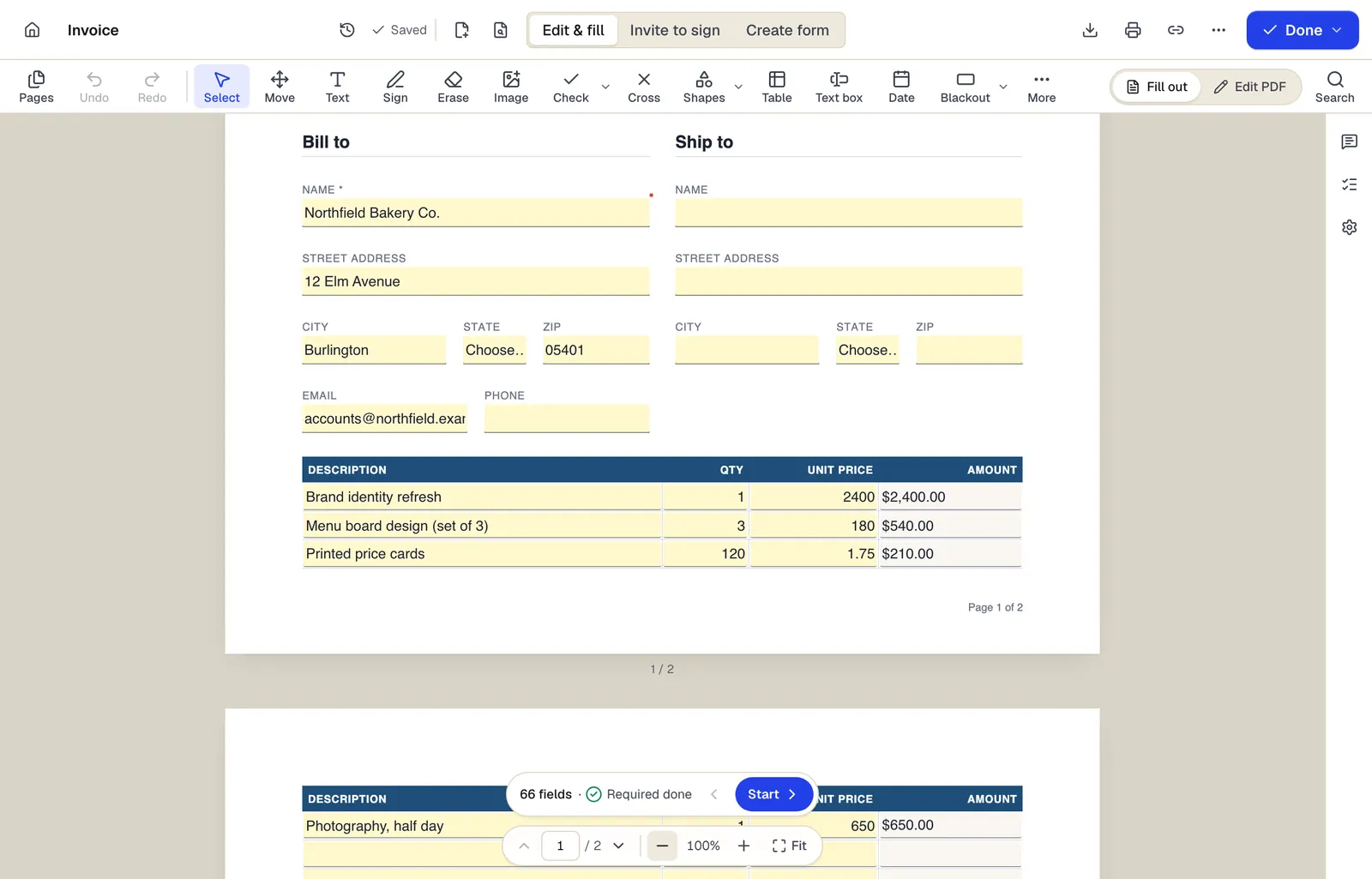
Fillable fields work as they are; on a flat page you type with text boxes.
- 3
Your filled copy
Download, print, sign or send it — the original stays untouched.
Who files it
- Merchant acquiring entities that settle payment card transactions
- Third party settlement organizations, such as payment apps and online marketplaces
- Electronic payment facilitators that pay sellers for another company
- Recipients use the page to check the form they got
What you need
- Your filer name, address and TIN, and the PSE name and phone if different
- Each payee's name, address and TIN
- Gross 2026 payments and the card-not-present part
- Monthly totals and the number of payment transactions
- Cash tips and tipped occupation codes, if any
Line by line
How to fill out Form 1099-K
- 1
Filer, payee and checkboxes
Enter both parties' details, then check whether you are a PSE or an EPF/other third party, and whether the form reports payment card or third party network transactions. Use separate forms if a payee had both.
- 2
Box 1a — Gross amount
Enter the gross total for the year without subtracting fees, refunds, credits or shipping.
- 3
Boxes 1b–1d
Box 1b is the card-not-present part, such as online or phone sales. New box 1c is cash tips included in 1a, and 1d holds up to two Treasury Tipped Occupation Codes.
- 4
Boxes 2–4
Box 2 is the four-digit merchant category code (TPSOs leave it blank), box 3 the number of transactions, not counting refunds, and box 4 backup withholding.
- 5
Boxes 5a–5l — Monthly amounts
Enter the gross amount for each month of 2026. The months should add up to box 1a.
- 6
Boxes 6–8 — State
Enter state tax withheld, your state ID and the state.
- 7
Print payee copies
Print Copy B for the payee and Copy 2 for state filing. File Copy A electronically or on the official red form.
Common Form 1099-K mistakes
- Reporting box 1a net of fees or refunds instead of the gross amount.
- Leaving out the tipped occupation code in box 1d when box 1c reports cash tips.
- Combining payment card and third party network amounts on one form.
- Monthly boxes 5a–5l that don't add up to box 1a.
- Filing Copy A printed from irs.gov, which isn't scannable.
Where to send it
Furnish Copy B by February 1, 2027. File with the IRS by March 1, 2027 on paper with Form 1096, or March 31, 2027 if you e-file through IRIS (https://www.irs.gov/filing/e-file-information-returns-with-iris). E-filing is required at 10 or more information returns in total. If you received a 1099-K, you don't send it anywhere; keep it with your records and report the income on your return.
Filing rules change. Confirm the address or portal on irs.gov before you send.
Form 1099-K: questions people ask
What is the 1099-K threshold for 2026?
Payment apps and marketplaces report a payee only when the year's payments exceed $20,000 and the number of transactions exceeds 200. Payment card processors report card payments with no minimum.
Is box 1a my taxable income?
Not necessarily. Box 1a is the gross amount before fees, refunds and shipping. You report your income on your return, with or without a 1099-K.
I got a 1099-K for money from friends and family. Is it taxable?
The IRS says gifts and reimbursements for personal expenses shouldn't be on a 1099-K and aren't taxable income. Ask the filer named on the form for a corrected one.
What are boxes 1c and 1d?
They are new on the December 2026 revision. Box 1c shows cash tips included in box 1a, and box 1d shows the payee's Treasury Tipped Occupation Codes.
1099-K or 1099-NEC for a contractor I paid by card or app?
The payment processor reports those payments on 1099-K, so you don't also report them on 1099-NEC.